She Called the Tune: Five Women Who Led Blues Bands With a Guitar and a Business Plan
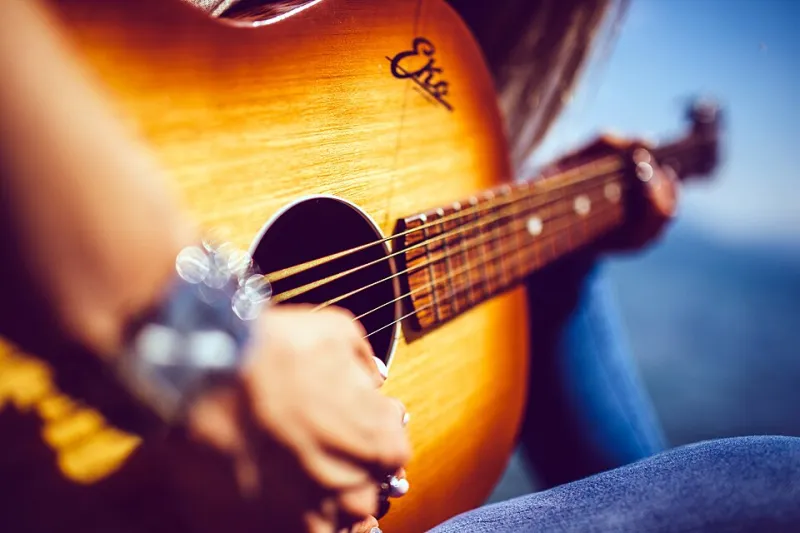
Photo: Mic JohnsonLP, CC BY 2.0, via Wikimedia Commons
Ask someone to picture a blues guitarist and you'll usually get the same image: a man in a hat, chin down, a hollow-body pulled close to his chest. That image isn't wrong. It's just cropped.
Women have been playing lead in this music since before anyone had a name for it — fronting bands, cutting sides, hiring the sidemen, arguing with the label. When the canon got assembled in the back half of the twentieth century, a lot of them landed in odd bins: novelty, gospel, 'girl singer,' or a single-disc compilation with a lipstick-red cover. So here are five, treated the way they actually worked — as bandleaders and lead players — plus a few notes on what the packaging choices tell us.
Memphis Minnie: The Boss With the Steel on Her Finger
Lizzie Douglas grew up around Walls, Mississippi, and learned to play on the street corners of Memphis before she was out of her teens. By the late 1920s she was in Chicago, recording under the name Memphis Minnie and doing something plenty of men around her weren't: running the show.
She played a National steel and, later, the electric guitar. She wrote her own material. She cut 'When the Levee Breaks' with Kansas Joe McCoy in 1929 — you know the riff, because a British rock band got rich off it decades later. She put together a traveling tent show. The story goes that she outplayed Big Bill Broonzy in a 1933 Chicago guitar contest, and the reason the story keeps circulating is that nobody who was there ever said otherwise.
Minnie spent some thirty years in the record business, cutting for a fistful of labels and shifting her sound as the market shifted. When she died in Memphis in 1973, her grave went unmarked for more than two decades until Bonnie Raitt and others helped pay for a headstone. That's a tidy little metaphor, and an accurate one.
Sister Rosetta Tharpe: Gospel Hands, Rock and Roll Ears
Rosetta Tharpe is the one people finally caught up with — inducted into the Rock & Roll Hall of Fame in 2018, cited endlessly by the people she taught without meaning to. In the 1940s she carried a Gibson into churches where a woman with a guitar was already a conversation, then took it to the theaters.
Her 1944 side 'Strange Things Happening Every Day' crossed over to the R&B chart and became one of the biggest records in Decca's catalog. She played with Lucky Millinder's orchestra — a Black woman leading a solo in front of a full swing band, dressed for it, grinning through it. The 1957 footage of her playing at a railway station outside Manchester, England, is the closest thing American music has to a birth certificate for rock guitar.
What's revealing is the label's filing system. Tharpe was marketed through gospel channels and R&B channels at the same time, as though a woman who wrote her own arrangements had to be sold as two separate people.
Jessie Mae Hemphill: The Drone That Rewired the Map
In the hills outside Senatobia, Mississippi, Jessie Mae Hemphill learned music from a family that had been making it for generations — her grandfather, Sid Hemphill, sat at the center of a fife-and-drum tradition that predates the blues itself.
She played a guitar with a thumping, hypnotic low end, and she played the tambourine like a rhythm section. Her 1981 album 'She-Wolf' is the record everybody name-drops, and it earned her a W.C. Handy Award for traditional female blues artist in 1987. A stroke in the 1990s ended her guitar playing, which means a great deal of her career exists as memory and a handful of sessions.
Her real influence is easier to hear than to cite. That hill-country drone is the sound a lot of younger players reach for when they're tired of twelve bars and a tidy turnaround. Hemphill got there with a guitar, a foot, and no interest in being tidy.
Beverly 'Guitar' Watkins: Atlanta's Longest-Running Lead Player
Beverly Watkins came out of Atlanta at the end of the 1930s and was working professionally as a teenager. She spent years in Piano Red's band, played sessions around Georgia, and toured the chitlin' circuit on bills where the surest way to get noticed was to outplay the headliner.
The stories attached to her — the revue gigs, the famous bandleaders she sat in with — got repeated so often that it's hard to sort the record from the legend, and that itself is a kind of archival failure. What isn't in dispute: she was a fluid, aggressive lead player, and for decades she held down day jobs because the music didn't pay enough.
By the 2000s she'd been re-embraced by younger Atlanta fans and club bookers, playing with a renewed ferocity until she was struck by a car and killed in 2019. She was in her eighties and still the best guitarist on the bill.
Adia Victoria: The Inheritor Who Won't Be a Footnote
Adia Victoria grew up in Spartanburg, South Carolina, and came to the blues side-on — as a listener first, then as a writer who took the tradition seriously enough to fight with it. 'Beyond the Bloodhounds,' 'Silences,' and 'A Southern Gothic' are not revival records. They use the blues the way it was always used: as a vocabulary for saying something the culture would rather not hear.
She's also been outspoken about Hemphill and about the way Black women's contributions get treated as texture rather than architecture. That's the through-line all five share.
What the Packaging Tells You
The canon didn't lose these players by accident. It lost them through a series of ordinary commercial decisions. Labels put women on 'Women of the Blues' anthologies instead of in the main catalog. Critics wrote about 'authenticity' when they meant access. Royalty structures and publishing deals favored whoever was in the room with the lawyer. And most of all, the industry kept treating a woman holding a guitar as a subject worth remarking on, rather than a musician worth listening to.
Start with 'She-Wolf.' Then go find Minnie's 1930s sides. The gatefold might have left these women out, but the grooves never did.