The Bookers in the Back Booth: The Women Who Ran Jazz Nightlife
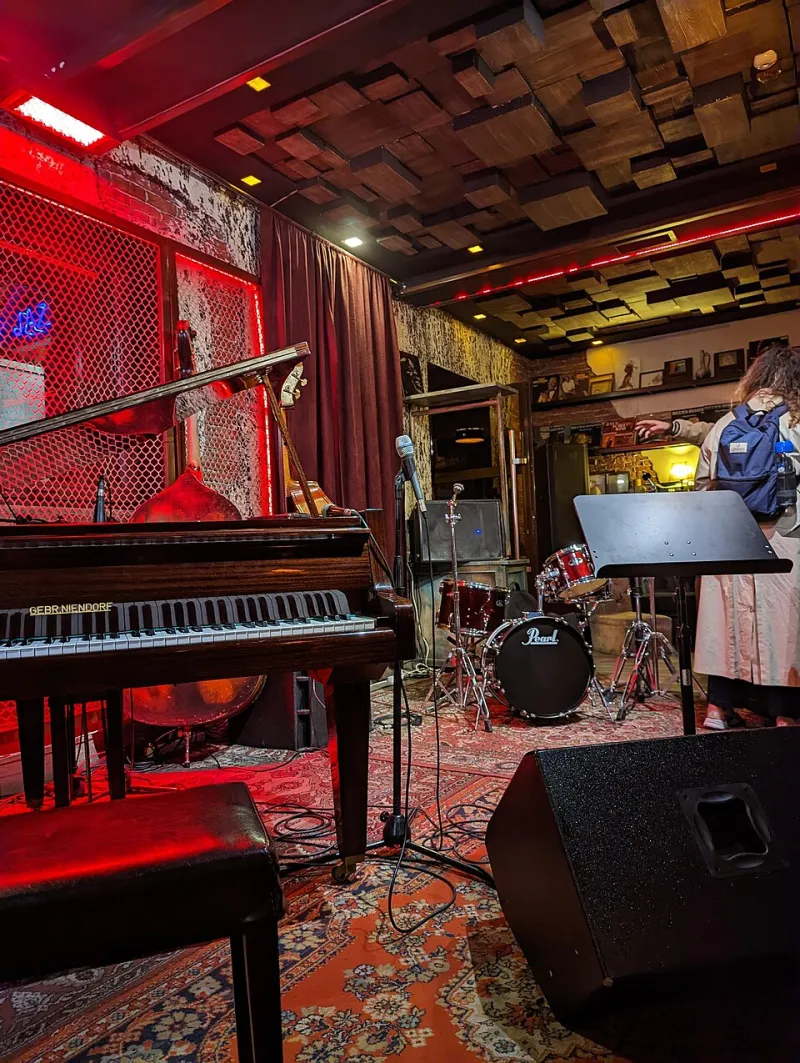
Photo: FingerWiki, CC BY-SA 4.0, via Wikimedia Commons
The names on the poster are usually the men with horns. The names on the lease, the liquor license, the booking contract, and the pay envelope are another story. For much of jazz and blues history, women ran the machinery of the night while the spotlight stayed trained somewhere else. They were club owners, bookers, publicists, managers, label go-betweens, and the people who knew which cop was on the take and which critic was safe to call.
That is not a side note. It is a correction. The so-called golden age of jazz nightlife was not built by genius alone. It was built by people who could read a room, balance a ledger, and talk a nervous artist through a bad week. A lot of them were women.
The job no one put on a poster
The work came in different shapes. Some women inherited a club and made it theirs. Some started as wives or assistants and ended up running the business. Some were publicists who understood that a review in the right paper could do more for a career than a month of one-nighters. Some were producers who got sessions made when nobody else would return a call.
Helen Oakley Dance is one example worth knowing. A Chicago critic and producer, she worked across racial lines in an era when that could be dangerous, helping to organize and document small-group jazz sessions. Gladys Hampton ran the business side of Lionel Hampton's band, including publishing and contracts, at a time when the fine print could eat an artist alive. Helen Keane managed Bill Evans through some of his most productive and most fragile years, proving that a manager could be both a protector and a hard-nosed negotiator. Lorraine Gordon eventually became the keeper of the Village Vanguard, one of the country's most important listening rooms. Cobi Narita promoted concerts and built the Universal Jazz Coalition, creating opportunities for musicians who were being ignored by the mainstream. Sue Mingus managed Charles Mingus's legacy and kept his bands working long after the bassist was gone.
None of that fits neatly on a marquee. All of it shaped who got heard.
Money, race, and the liquor board
The romantic version of jazz history likes the image of the genius who cannot be bothered with paperwork. The back booth knows better. Clubs needed liquor licenses. They needed fire inspections, police tolerance, and landlords who did not panic every time the bass got loud. They needed cash flow on a Tuesday. Women in this world had to be diplomats, enforcers, and bookkeepers, often in the same hour.
Race shaped everything. A white woman might have an easier time getting a loan or a license in some cities, but she still had to navigate a music business that treated Black artists as both essential and disposable. A Black woman often had to build twice the paper trail and twice the reputation to get the same room. Segregation determined which neighborhoods a club could serve, which bands could stay where, and which audiences could safely mix. The women who ran these rooms did not transcend those rules. They worked inside them, around them, and sometimes against them.
Gender shaped the rest. A woman who spoke too softly was ignored. A woman who spoke too sharply was called difficult. A woman who handled money was suspected of taking some. The ones who lasted learned to keep receipts, keep allies, and keep a straight face when a bandleader tried to explain why the door count was lower than the bar tab.
The credit gap
Jazz history is often written from the bandstand outward. The view from the back booth is different. From there, you see the mailing list, the seating chart, the favors, the loans, the late-night phone calls, and the quiet decisions about who gets a second set and who gets a second chance.
That is why the credit gap matters. Clubs are often named for men. Bands are named for men. The scene itself is named for nobody. The women who built the scene are remembered, when they are remembered at all, as hostesses or wives or muses. Some were all of those things. None were only those things.
You can see the pattern in the archives. The letters are there. The contracts are there. The photographs show women standing at the edge of the frame, holding a cigarette, watching the door, waiting for the set to end. The captions rarely say what they did. But the room was still standing because they did it.
What the back booth knew
The best of these women understood that a scene is not just a schedule. It is a web of trust. They knew which drummer was reliable and which singer needed a ride. They knew which critic was curious and which one was lazy. They knew when to comp a table, when to call a lawyer, and when to let a musician sleep in the office because he had nowhere else to go.
That kind of knowledge does not always make it into the history books. It should. Because the story of American music is not only a story of songs. It is a story of rooms, and the people who kept the doors open.
In 2026, the industry still likes to celebrate the face on the album cover. Fair enough. But if you want to understand how the night actually got built, look past the velvet rope. Look in the back booth. Someone is there with a ledger, a guest list, and a very good memory.