Color Lines and Common Ground: The Integrated Bands That Dared to Play Together
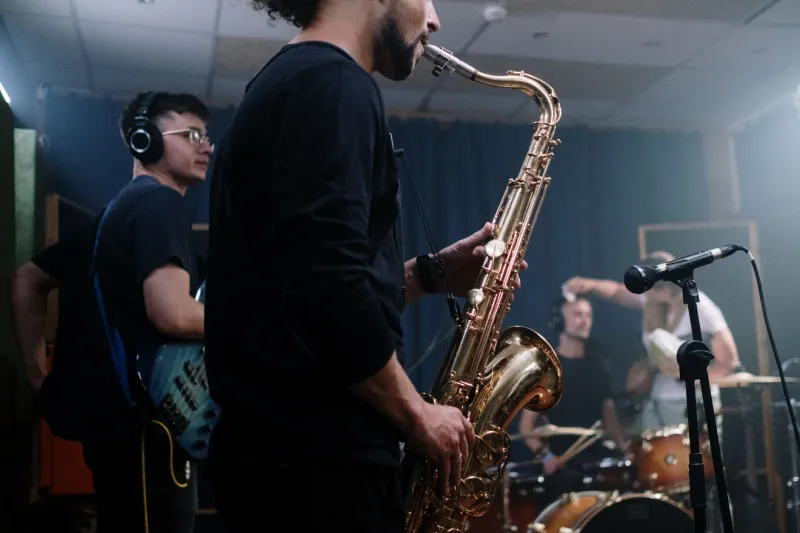
Somewhere between a downbeat and a turnaround, race stopped mattering—at least for a few bars. That was the quiet miracle happening inside America's jazz clubs and recording studios decades before anyone was marching on Washington. Musicians were doing what politicians couldn't: sitting down together, counting off a tune, and figuring out how to speak the same musical language regardless of what the world outside the door was saying.
It wasn't easy. It wasn't safe. And it absolutely was not accidental.
The Room Where It Started
If you want to trace the roots of musical integration in America, you end up in New York—specifically Harlem in the late 1930s and early 1940s. Benny Goodman is often handed the crown here, and fair enough: his 1938 Carnegie Hall concert featured Teddy Wilson and Lionel Hampton, two Black musicians sharing a stage at one of the most prestigious venues in the country. That was a statement. But Goodman didn't invent the idea—he just had the platform to make it undeniable.
Billie Holiday had already been navigating this territory with Artie Shaw's orchestra, an arrangement that was as groundbreaking as it was complicated. She was the only Black performer in a white band, and the friction she faced on the road—being turned away from hotels, asked to enter venues through back doors, told to darken her skin with makeup so audiences wouldn't notice her race—was a daily reminder that the music didn't insulate anyone from America's uglier realities. She eventually left Shaw's band, partly because of the relentless indignities. But those recordings they made together? Still stunning. Still proof that something real was happening.
Bird, Miles, and the Bebop Integration
Then came bebop, and with it a whole new generation of musicians who weren't interested in playing by anyone's rules—social or musical. Charlie Parker and Miles Davis were central figures in a scene that was genuinely mixed, where white musicians like Al Haig, Red Rodney, and Lee Konitz weren't just tolerated but actively recruited because they could keep up.
Miles Davis's legendary Birth of the Cool sessions from 1949 and 1950 are often discussed in terms of their harmonic innovation, but the personnel list is just as radical for its time. Gerry Mulligan, Lee Konitz, and Gil Evans—all white—sat alongside Davis, J.J. Johnson, and Max Roach to create something that sounded like nothing else on earth. Nobody was making a political statement, exactly. They were just making the best music they could with the best people available. Which, in 1949 America, was its own kind of revolution.
Red Rodney, a white trumpet player from Philadelphia, toured with Charlie Parker's quintet at a time when a mixed-race band couldn't always get a hotel room together in the South. The solution? Parker would sometimes introduce Rodney as "Albino Red," a fictional light-skinned Black musician. It was absurd. It was dangerous. And it kept the band together on the road.
The Cost of Playing Together
Let's be honest about what integration actually cost these musicians. It wasn't a feel-good story with clean edges. Black musicians in mixed groups frequently bore the heaviest burden—absorbing the stares, the slurs, the logistical nightmares of touring through the Jim Crow South. White musicians in those same groups faced their own social consequences: being labeled race traitors, losing bookings at certain venues, getting cut off from parts of the white music establishment.
Charles Mingus spoke openly about the psychological weight of navigating white-dominated record labels and club circuits while trying to maintain artistic integrity and personal dignity simultaneously. His frustration wasn't just with overtly racist gatekeepers—it was with the well-meaning liberals who wanted to celebrate integration as an abstract idea while remaining comfortable with the structural inequities underneath it.
Billie Holiday's Strange Fruit, recorded in 1939, stands as maybe the starkest example of what was actually at stake. Her label, Columbia, refused to touch it. She recorded it on a smaller imprint, Commodore, and performed it at Café Society in New York—one of the first truly integrated nightclubs in America. The song, a brutal indictment of lynching, wasn't just music. It was testimony.
The Quiet Architects
Beyond the marquee names, there were lesser-known figures doing equally important work. John Hammond, a white record producer and talent scout, spent decades deliberately bridging the racial gap in American music—connecting Bessie Smith, Billie Holiday, and Count Basie with wider audiences, often at personal and professional cost. His 1938 From Spirituals to Swing concert at Carnegie Hall was a deliberate, curated argument that Black American music was serious art deserving serious attention.
On the bandstand level, drummer Gene Krupa consistently hired Black musicians and refused to perform in venues that enforced segregation. Bassist Charles Mingus co-founded Debut Records partly to control his own output and avoid the compromises that came with mainstream labels. These weren't isolated gestures—they were part of a sustained, conscious effort by musicians on both sides of the color line to build something different.
What It Left Behind
The integrated sessions and bands of the mid-20th century didn't solve racism. Nobody's pretending they did. But they created a documented, audible record of what collaboration across difference could sound like—and that record has been playing ever since.
Every time a young musician pulls out a Birth of the Cool LP or digs into a Billie Holiday session, they're hearing the evidence. Not just of great music, but of people choosing to show up for each other when the country was actively telling them not to. That's not a museum piece. That's a living argument.
And at Jaxx Liberty, that argument still sounds pretty damn convincing.