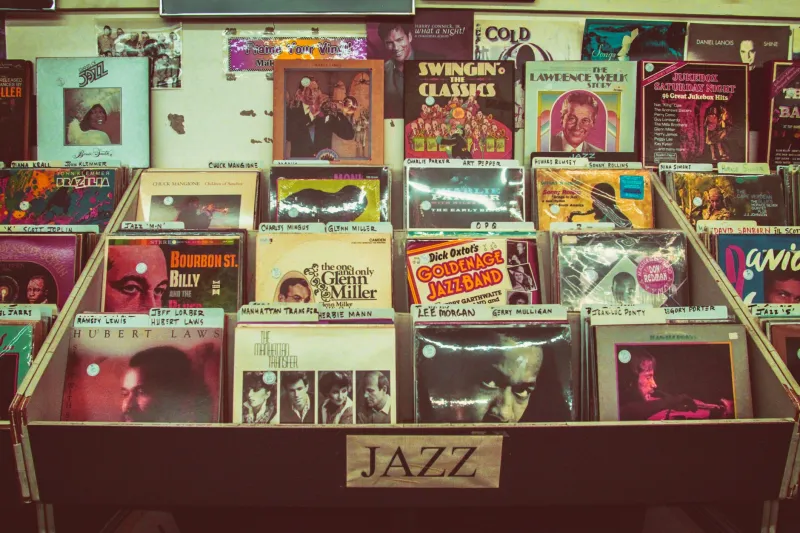
Billboard's Best-Kept Secret: Jazz Standards Were Pop Hits Before They Were Classics
Here's something that might mess with your whole mental filing system: the songs we now treat like museum pieces — the ones that get played at cocktail hours and used as background ambiance at upscale restaurants — were, at one point, genuine chart-toppers. Not niche. Not underground. Not beloved-by-a-select-few. They were hits. The kind of hits that had teenagers humming them on street corners and radio DJs spinning them back-to-back with whatever else was moving units that week.
We've done a weird thing with jazz history. Somewhere along the way, we collectively decided that because these songs are now considered 'timeless,' they must have always lived outside the commercial mainstream. That's just not true. And the charts — dusty, overlooked, and almost never cited in casual music conversation — are right there to prove it.
The Numbers Nobody Talks About
Let's start with some specifics, because the specifics are genuinely surprising.
Nat King Cole's version of "(Get Your Kicks On) Route 66" hit the Billboard R&B chart in 1946 and crossed over hard into mainstream pop territory. Billie Holiday's recordings consistently charted during the late 1930s and early 1940s. Ella Fitzgerald's "A-Tisket, A-Tasket" went to number one on the pop charts in 1938 and stayed there for seventeen weeks. Seventeen. That's not a cult favorite finding its audience slowly over decades. That's a full-on commercial juggernaut.
Duke Ellington's "Sophisticated Lady" charted. So did "Stardust" in multiple recorded versions — the Artie Shaw recording alone moved hundreds of thousands of units at a time when selling that many records was a genuinely massive deal. Glenn Miller's "In the Mood," which sits comfortably in the jazz-adjacent swing canon, was a number-one record. These weren't underground dispatches from a niche scene. They were the mainstream.
Radio Was the Algorithm
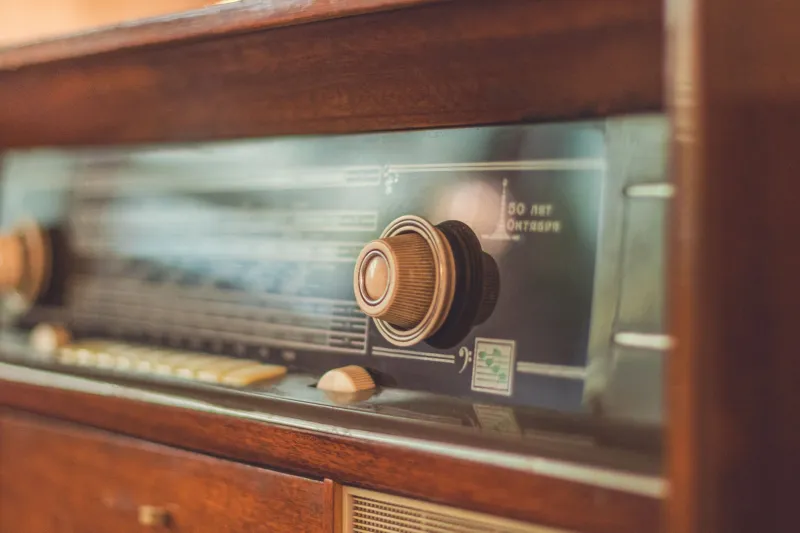
To understand how jazz standards got to the top of the charts, you have to understand what radio meant in mid-century America. There was no Spotify, no playlist curation, no algorithmic recommendation engine deciding what got heard. Radio was it. And radio programmers in the 1930s and 1940s were not programming for a jazz enthusiast subset — they were programming for everybody.
When a bandleader like Benny Goodman got a radio slot, he was reaching the same broad audience that a country act or a pop crooner would reach. The segregation of musical genres into distinct listener demographics — something the music industry perfected in the postwar era — hadn't fully hardened yet. Jazz and swing were genuinely popular music. They competed directly with everything else on the dial, and they frequently won.
Live performance metrics told the same story. The ballrooms where big bands played weren't intimate jazz clubs catering to aficionados. They were enormous venues — the Savoy Ballroom in Harlem, the Palomar Ballroom in Los Angeles, the Meadowbrook in New Jersey — that held thousands of people on a given night. These weren't scenes. They were events.
How We Forgot
So how did we lose track of all this? A few things happened at roughly the same time, and they compounded each other in ways that reshaped the cultural memory of jazz almost completely.
First, bebop arrived in the mid-1940s and deliberately moved jazz away from mass-market accessibility. Charlie Parker and Dizzy Gillespie weren't making music for the ballroom crowd, and they knew it. Bebop was a conscious artistic statement, and part of that statement was a rejection of commercial palatability. That shift was real, it was significant, and it was artistically necessary — but it also cast a retroactive shadow over the swing era, making the whole preceding period seem like it had always been 'serious art music' rather than popular entertainment.
Second, the music industry itself reorganized around genre categories in a way that pushed jazz into a corner. When Billboard formalized its chart categories in the late 1940s and beyond, jazz got its own chart — which sounds like recognition, but was actually a kind of commercial quarantine. Once jazz had its own separate chart, its chart performance stopped being measured against pop and country and R&B. It was only competing against itself. The mainstream story disappeared from the data.
Third, and maybe most importantly, the people who care most about jazz history — the scholars, the critics, the serious collectors — have often had a complicated relationship with the music's commercial past. There's a tendency in serious jazz discourse to treat the music's artistic legitimacy as being in tension with its popularity. The more 'important' a recording is considered, the more it gets discussed in terms of its harmonic innovation or its improvisational depth — not its chart position.
What We're Actually Hearing When We Hear a Standard
This matters for more than historical accuracy. When you understand that "All the Things You Are" or "Body and Soul" were pop hits before they were jazz standards, you hear them differently. You hear the craft that was required to make something genuinely emotionally accessible to a mass audience while still containing enough musical sophistication to reward repeated listening over decades.
That's actually a harder thing to do than pure avant-garde experimentation. Writing something that works on both levels — that a teenager in 1940 could hum and that a musician in 2025 can still find new angles in — requires a specific kind of genius. The fact that we've recategorized that genius as 'timeless art' rather than 'incredibly successful commercial music' is partly a tribute to the songs' durability. But it also flattens the story.
The composers and performers who made these records were not operating outside the marketplace. They were working within it, competing for ears and dollars and radio spins just like everyone else. They just happened to win in ways that outlasted the charts entirely.
Getting the Record Straight
Next time someone describes a jazz standard as a piece of 'sophisticated' music that was always above the fray of commercial pop, push back a little. Pull up some chart history. Look at what "Tuxedo Junction" was doing on the Billboard charts in 1940. Check the sales figures on early Louis Armstrong recordings.
The music that we've elevated into the canon of American artistic achievement was, at its moment of creation, also just really popular music that a lot of people really loved. That doesn't diminish it. If anything, it makes the story richer — and it gives us a much more honest picture of what American music actually looked like when jazz was sitting at the center of the whole thing, not off to the side in a velvet-roped corner.
The charts knew. We just forgot to keep reading them.