They Know Every Record and Every Story Behind It
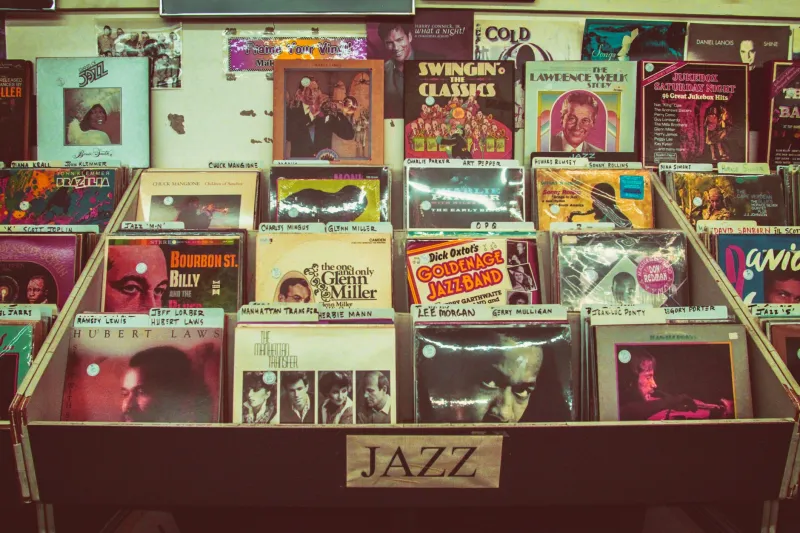
Walk into the right record store on the right afternoon and something shifts. It's not just the smell of old vinyl or the hum of a turntable spinning somewhere in the back. It's the person behind the counter — the one who glances up, clocks what you're wearing, and before you've said a word, pulls a copy of something you didn't even know you were looking for. That person isn't running a shop. They're running a living museum.
Across the country, a dwindling but fiercely dedicated group of independent record store owners have become the unofficial archivists of American jazz and blues. They don't have university titles or institutional budgets. What they have is decades of listening, collecting, and conversation — and an almost supernatural ability to connect the right record with the right person at exactly the right moment.
More Than Merchandise
Ask any serious jazz or blues collector where they found their most important record, and nine times out of ten, the answer involves a person, not a platform. It involves someone who said, "You like early Coltrane? Then you need to hear this." That kind of curation can't be automated. It lives in people.
Take the kind of store owner you'll find in cities like New Orleans, Chicago, Memphis, or Detroit — places where jazz and blues didn't just pass through but took root. These are people who opened their shops in the '70s or '80s, sometimes out of obsession, sometimes out of necessity, and ended up becoming something the neighborhood didn't even know it needed: a keeper of stories.
Many of them knew the artists personally. Not as celebrities — as regulars. A saxophonist who'd stop by on Tuesday afternoons to flip through the blues section. A bandleader who'd leave a box of promos and stay for two hours talking about recording sessions. A guitarist who traded a signed pressing for store credit and then became one of the most important voices in regional blues. These owners hold those memories the way old wood holds heat — slowly, quietly, and for a very long time.
The Art of Knowing What You Don't Know You Want
The best record store owners operate on instinct sharpened by experience. It's not that they've memorized a catalog — it's that they understand music as a living, relational thing. They know that the person asking about Muddy Waters probably needs to hear Howlin' Wolf next, and that the kid who came in for a Herbie Hancock reissue might be ready for something that'll genuinely rearrange their brain.
This kind of deep contextual knowledge is what makes these stores irreplaceable. Streaming platforms can surface what's popular or algorithmically adjacent. They cannot tell you that the B-side on a 1962 pressing is where the real magic happened, or that a particular live recording captures a moment in a Chicago club that no studio session ever matched. That's the stuff that lives in people who've been paying attention for forty years.
Some owners keep handwritten logs — not for inventory, but for memory. Notes about which collectors came through, what they were after, what they found. A kind of informal oral history, committed to paper before it disappears.
Passing It Down
What's striking about many of these store owners is how deliberately they mentor the next wave of collectors. It's not just commerce. There's a real sense of cultural responsibility — a feeling that if they don't pass this knowledge on, it evaporates.
Young listeners who stumble into these shops expecting a quick transaction often walk out two hours later with a stack of records, a reading list, and the name of a musician they'd never heard of. That's not an accident. The good store owners engineer those moments. They ask questions. They listen. They match.
Some have started hosting listening sessions — low-key, informal gatherings where they spin records and talk about the history behind them. Not lectures, just conversations. The kind that happen naturally when someone who really knows something is willing to share it. A few have partnered with local schools or libraries, bringing vinyl and stories into spaces that don't usually get either.
The goal isn't nostalgia. It's continuity. These owners understand that jazz and blues aren't museum pieces — they're living traditions that need living carriers. And right now, the people behind the counter at the last great independent record stores are among the most important carriers we've got.
The Records That Shouldn't Exist (But Do)
Every serious store has a back room, a locked case, or at minimum a mental list of things that aren't on the floor. The rare finds. The pressings that surface every decade or so. The acetates, the promos, the limited regional releases that somehow made it this far without being destroyed or absorbed into some private collection never to be seen again.
These owners are often the reason those records still exist. They bought collections from estates before anyone else knew to look. They traded for things other dealers passed over. They recognized value where the market hadn't caught up yet — not financial value, necessarily, but historical weight.
And when the right collector comes along, they don't just sell the record. They tell the story. Where it came from, who played on it, what was happening in American music at that exact moment in time. Because without the story, it's just a piece of wax. With it, it's a document.
Why This Matters Right Now
It would be easy to frame this as a dying-world story — the last of a breed, the end of an era. But that's not quite right. What's happening in the best independent record stores is something more like a slow, stubborn resurgence. New listeners are coming in. Young collectors are showing up with genuine curiosity and open ears. The vinyl revival isn't just nostalgia — it's a generation reaching for something real in a world that's increasingly synthetic.
And the people behind the counter are ready for them. They've been ready. They've been waiting, actually, with a stack of records and forty years of stories, just hoping someone would walk through the door and ask the right question.
If you haven't found your record store yet — the one with the person who actually knows — keep looking. When you find it, stay a while. Listen. Ask questions. Let them pull something from the back you've never heard of.
That's where American music lives. Not in a playlist. In a conversation.