Same Circle, Different Era: How Jazz Improvisation Lit the Fuse for Hip-Hop's Freestyle Culture
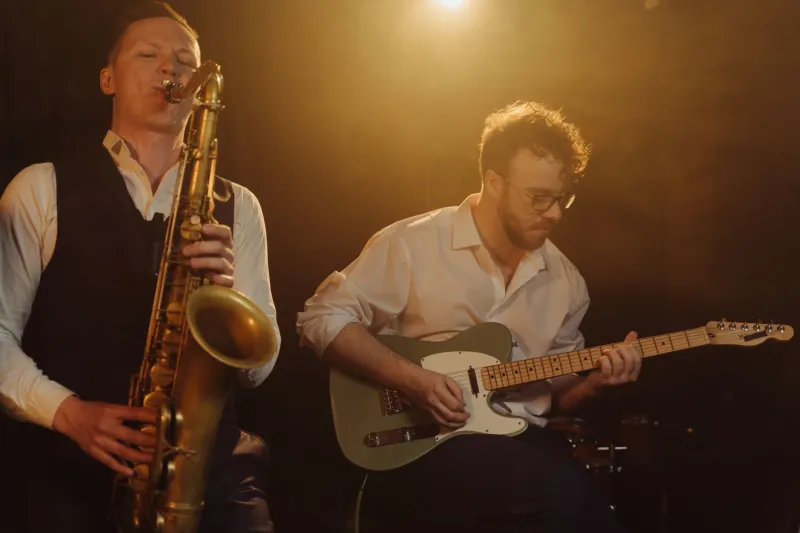
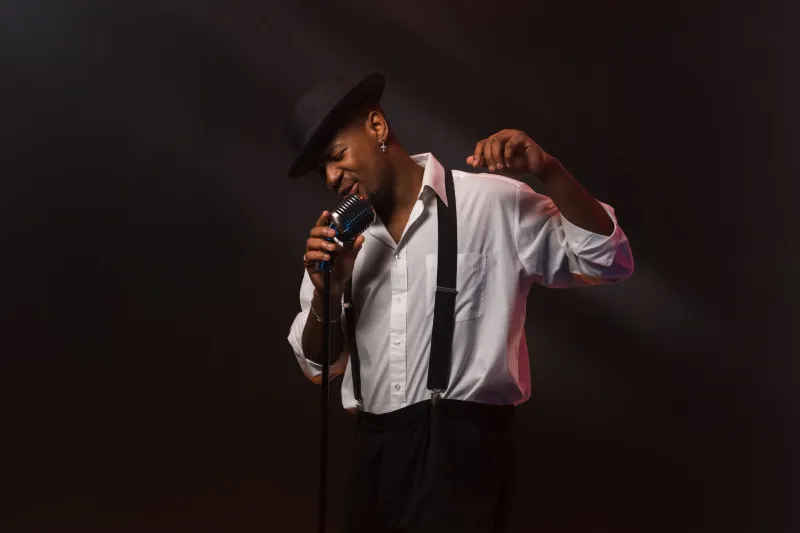
There's a moment in any good cypher — whether you're watching it unfold on a Harlem corner in 1994 or streaming a BET Hip Hop Awards freestyle right now — where something shifts. The MC stops performing and starts responding. To the beat, to the crowd, to whoever just went before them. The words come from somewhere instinctive, unplanned, and almost alarmingly precise. If you've ever watched a jazz tenor player lock eyes with a pianist mid-solo and do the exact same thing, you already understand the connection.
Jazz improvisation and hip-hop freestyling aren't just distant cousins. They're the same conversation happening in different rooms, across different decades, dressed in different clothes.
The Cutting Session and the Battle Rap: Same Rules, Different Instruments
Back in the 1930s and 40s, Kansas City was the proving ground. Jam sessions at clubs like the Reno Club weren't just casual hangouts — they were tests. Musicians would show up unannounced, challenge whoever was holding the stage, and the crowd would decide who walked away with their reputation intact. Lester Young, Coleman Hawkins, Charlie Parker — all of them came up through that fire. The cutting session was brutal, democratic, and deeply creative. Nobody got to hide behind sheet music.
Flash forward to the South Bronx in the late 1970s, and you've got Afrika Bambaataa organizing b-boy battles as an alternative to gang violence. By the mid-80s, freestyle rap battles had their own unwritten code: you come correct, you respond to what the other person said, you don't repeat yourself, and if you freeze up, you're done. The crowd is judge and jury.
The parallels aren't accidental. Hip-hop didn't emerge in a cultural vacuum. It grew up in neighborhoods where jazz and blues records were still spinning on turntables, where older relatives had seen Coltrane live, where the barbershop had a Miles Davis poster on the wall next to the Muhammad Ali photo.
Call and Response: The Invisible Thread
One of the foundational principles in jazz — and really in all of African American musical tradition going back to the field hollers and gospel shouts — is call and response. A soloist states a phrase, and the band (or the congregation, or the crowd) answers it. It's a conversation with structure but no script.
In hip-hop, that same architecture shows up everywhere. The MC throws a line, the crowd echoes the hook. One rapper starts a bar, their tag partner finishes it. A producer drops a sample that references something the lyrics are about to say. It's layered, it's reactive, and it rewards people who are really listening.
Jazz pianist and educator Marcus Shelby, who has spent years examining the relationship between jazz tradition and contemporary Black music, put it plainly in a 2022 panel discussion: "When Jay-Z freestyles over a live band, he's not doing something new. He's doing something very, very old. The vocabulary changed. The spirit didn't."
What Producers Learned From the Bandleader
Here's where it gets interesting from a technical standpoint. The role of the hip-hop producer maps almost exactly onto the role of the jazz bandleader or arranger. Both are responsible for creating a sonic environment that leaves room for the soloist to breathe while still providing enough structure to keep things from flying apart.
Thelonious Monk was famous for the space he left in his playing — the notes he didn't hit were as important as the ones he did. That philosophy has a direct line to producers like J Dilla, whose beats were famously "drunk," slightly off the grid, giving MCs room to find their own rhythmic pocket instead of riding a rigid click track. Dilla himself cited jazz records as a primary influence, and you can hear it in the way his arrangements shift and breathe.
Quincy Jones bridging the jazz and pop worlds in the 1960s and 70s laid groundwork that producers like Dr. Dre and Kanye West would later build entire careers on — the idea that sophisticated harmonic arrangement and street-level energy aren't opposites. You can have both. Jazz knew that first.
The Vocabulary Transfers
Spend time with any serious freestyle MC and ask them how they think about their craft. Odds are they'll use language that sounds lifted from a jazz masterclass. "I'm listening to the beat and responding to it." "I never plan a punchline — it has to come out of what I just said." "The best stuff happens when I stop thinking and just play."
That last one — "just play" — is practically a mantra in jazz pedagogy. Charlie Parker reportedly told younger musicians that they needed to practice until they'd internalized every scale, every chord change, every harmonic possibility — and then forget all of it when they got on stage. The preparation enables the spontaneity. Freestyle rap works exactly the same way. The best MCs have enormous reservoirs of vocabulary, rhythm patterns, and cultural references that they've absorbed over years. In the moment, they're not accessing a catalog. They're just talking. The catalog does the work invisibly.
Where the Circles Still Overlap
This isn't purely historical. In cities like New York, Chicago, and Los Angeles, there are active spaces where the two traditions literally share a stage. Events like the Jazz Is Dead concert series have brought hip-hop artists and jazz musicians together not as a novelty act but as a genuine creative conversation. Kendrick Lamar's To Pimp a Butterfly remains the most commercially visible example of a hip-hop artist fully committing to the jazz tradition — not sampling it, but inhabiting it, working with players like Kamasi Washington and Thundercat who are as fluent in Coltrane as they are in contemporary production.
Younger artists are continuing that work. Smino, Saba, and the whole Pivot Gang collective out of Chicago make music that refuses to separate the two traditions. Jazz clubs in New York — the ones still standing, anyway — have started hosting late-night sessions that blur the line between a set and a cypher. The musicians improvise, the MCs freestyle over it, and nobody's entirely sure what genre they're watching. That's probably the point.
The Lesson That Keeps Teaching Itself
What both traditions keep proving, generation after generation, is that the most powerful music happens when skilled people respond honestly to each other in real time. The chord changes matter. The rhyme schemes matter. The technique matters enormously. But the moment that lands — the one that makes the crowd lose it in a jazz club or a cypher circle — is always the moment when someone stopped calculating and just reacted.
Jazz figured that out in the back rooms of Kansas City nearly a century ago. Hip-hop rediscovered it on the sidewalks of the Bronx and carried it forward. Different era, different instruments, different clothes — but if you listen close enough, it's the same circle. It always has been.