Behind the Bandleader: The Sidemen Who Quietly Shaped American Music
There's a moment in almost every great jazz or blues recording where something unexpected happens — a chord voicing that catches you off guard, a rhythm that leans just a little harder than it should, a single note that sounds like it came from somewhere deeper than rehearsal. More often than not, that moment didn't come from the name on the album cover. It came from the person sitting three chairs to the left, the one whose name appears in eight-point font on the back sleeve if it appears at all.
These are the sidemen. The session players. The hired guns who were never really just guns for hire.
For decades, jazz and blues history has been told through its headliners — Miles, Coltrane, Muddy, Howlin' Wolf. And those legends absolutely earned their place in the story. But strip away the supporting cast and what you've got is a melody without a body. The sidemen were the muscle, the texture, the connective tissue holding the whole thing together.
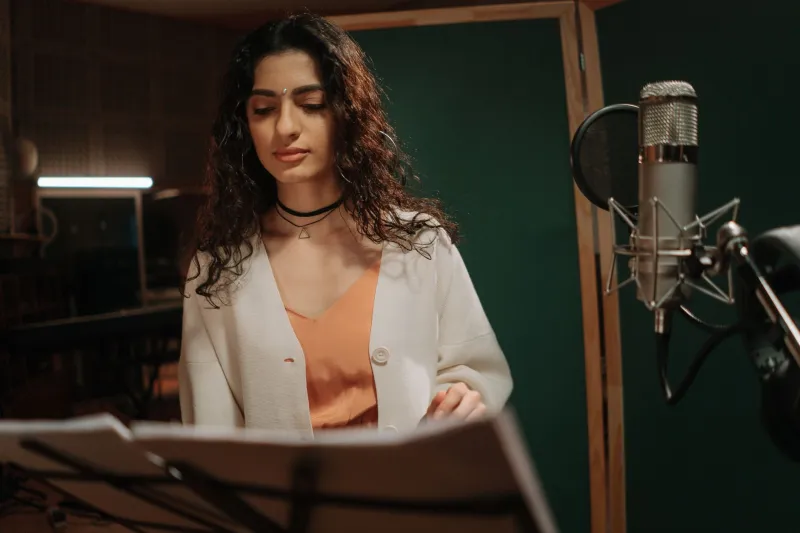
The Studio as Classroom
Ask any working session musician about their early days and you'll hear a version of the same story: you showed up, you listened, you adapted. Fast.
"The studio doesn't wait for you to figure it out," says Marcus Dellworth, a New Orleans-based bassist who has appeared on over 200 recordings across jazz, blues, R&B, and gospel. "You've got maybe two takes to understand what a bandleader wants, and half the time they can't even tell you in words. You've got to feel your way into the song."
That kind of musical intuition isn't born overnight. It's forged through repetition — through playing the same changes in twelve different keys, through sitting in on sessions for artists across wildly different styles, through learning when to step forward and when to disappear into the groove. The session circuit was, in many ways, the most rigorous music school in America. No tuition, no diploma, just the constant pressure of performance.
For blues sidemen in particular, the geography mattered. The Chess Records studios in Chicago, Stax in Memphis, Cosimo Matassa's legendary room in New Orleans — these weren't just recording facilities. They were institutions. A guitarist who spent a few seasons cutting tracks at Chess walked away with an education you couldn't find anywhere else on earth.
Anonymity as a Double-Edged Sword
Here's the complicated part: a lot of session players chose the shadows, at least at first. The work was steady, the pay was reliable (when labels played fair, which wasn't always), and there was a certain freedom in not being the face of anything. You could play bebop in the morning and Chicago blues in the afternoon. Nobody was watching your brand.
But anonymity has a shelf life. At some point, the musicians who'd been propping up everyone else's careers started wanting something to call their own.
Take the case of pianist Otis Spann, who spent years as the backbone of Muddy Waters' band. Spann was so integral to the Waters sound that separating one from the other was almost conceptually impossible. Yet Spann eventually stepped out with his own recordings, and what he made was stunning — deeply personal, rooted in the Delta but reaching toward something more expansive. The sideman had a whole story to tell. He just needed the space to tell it.
This pattern repeated itself across generations. Drummer Elvin Jones spent years defining the John Coltrane Quartet's volcanic rhythmic language before launching a series of recordings under his own name that cemented his reputation as one of the most original voices in the music. Guitarist Hubert Sumlin was Howlin' Wolf's shadow for decades, his jagged, unpredictable licks the sonic signature of some of the most ferocious blues ever recorded. When Sumlin finally got his own spotlight, audiences realized they'd been listening to a genius all along — they just hadn't known whose genius it was.
Building a Legacy Without a Marquee
So how do sidemen actually build legacies in an industry that's structurally designed to spotlight the front of the stage?
Some do it through sheer ubiquity. When your name shows up on enough classic records, people start connecting the dots. Bassist Ron Carter is a perfect example — his discography reads like a guided tour through the greatest moments in jazz history. After a while, the question isn't "who's playing bass on this?" It's "is that Ron Carter?" And it almost always is.
Others build their reputation through live performance, where the hierarchy flattens out a little. On a club stage, the sideman isn't hiding behind a recording credit. The audience sees exactly who's doing what, and the great ones get noticed. New York, Chicago, Kansas City, New Orleans — the club circuit has always been where sidemen got to stretch out, solo, and remind everyone in the room that they were something more than support staff.
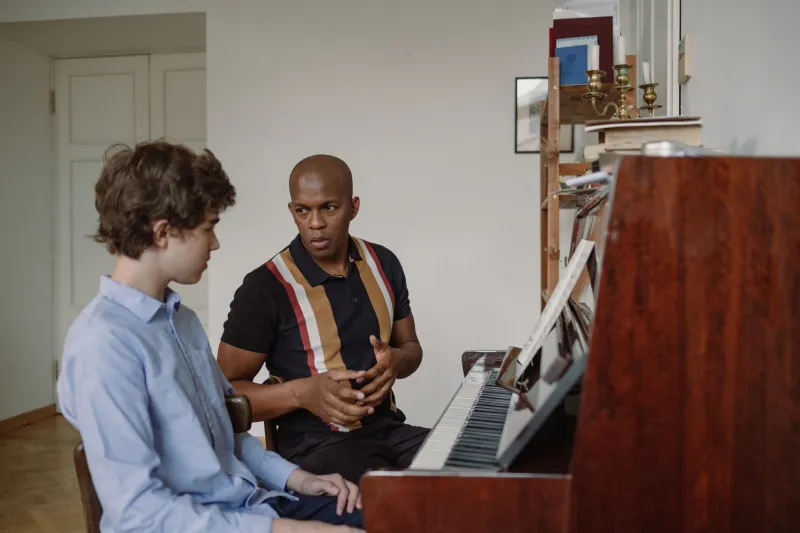
Teaching has also become a major avenue. Many of the most respected session players in jazz and blues have built second careers as educators, passing their hard-won knowledge to the next generation. Their legacy isn't just in the recordings — it's in every student who carries their approach into a new studio, a new stage, a new era.
The New Generation of Sidemen
The landscape has shifted, but the role hasn't disappeared. Contemporary sidemen are navigating a world where streaming has flattened income streams and social media has created new ways to build visibility — but the core challenge remains the same. You're serving someone else's vision while trying to maintain your own artistic identity.
Young players today are finding creative ways to thread that needle. Many use their session work as a platform, building social followings by posting behind-the-scenes content from sessions and tours. A few well-placed Instagram clips of a killer guitar solo can do more for name recognition than a dozen album credits.
But the veterans will tell you there's no substitute for the work itself. Every session is a lesson. Every bandleader you work with teaches you something — even if it's what not to do. The sideman's path is long and it's rarely straight, but for the musicians who commit to it, it builds a kind of depth that's hard to acquire any other way.
The Names Worth Knowing
If you've never gone down the rabbit hole of sideman discographies, now's a good time to start. Pull up James Jamerson's bass work on virtually anything Motown released in the 1960s. Find Clifford Solomon's saxophone on early Ray Charles records. Track down the full story of the Wrecking Crew, the LA session collective whose playing underpins some of the most iconic American recordings of the 20th century — including plenty of material that crossed into jazz and blues territory.
These musicians didn't just play on great records. In many cases, they made those records great. The bandleader brought the vision. The sideman made it real.
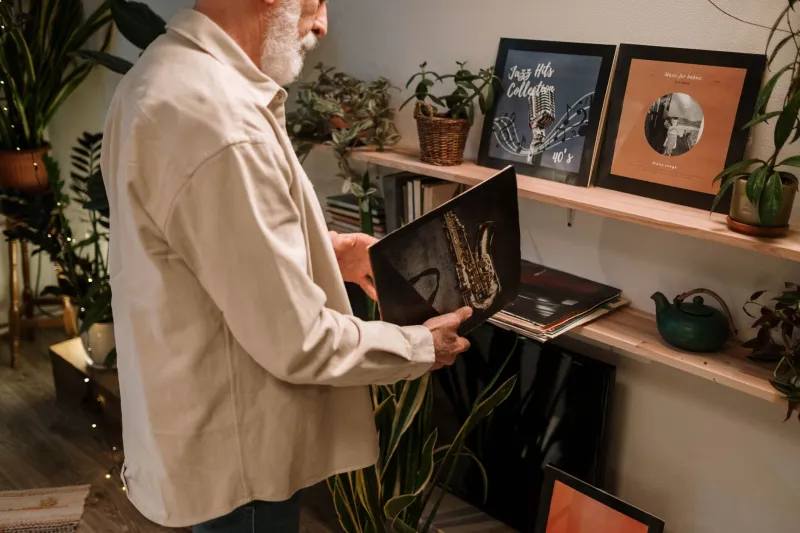
American music has always been a collective art form, even when it's sold as a solo act. The next time a song moves you — really moves you, right down to the bone — take a second to flip over the record, scroll through the credits, find the name you don't recognize. That person might just be the reason the whole thing works.
And chances are, they've got a story worth telling.