A Nickel in the Slot, a Career on the Line: How Jukebox Routes Shaped the Blues
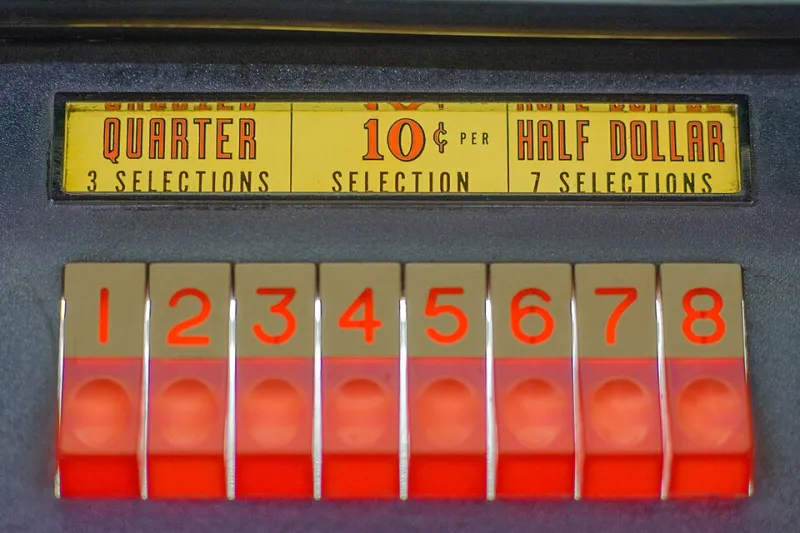
Photo: Ethan Long, CC BY-SA 2.0, via Wikimedia Commons
Before there was an algorithm, there was a guy in a panel truck with a clipboard, a few tools, and a route sheet. He did not look like a tastemaker. He looked like a repairman. But in the middle of the twentieth century, the jukebox route man was one of the most important gatekeepers in American music. If he stocked your record, it had a chance. If he did not, it might as well have been pressed for the warehouse.
The jukebox was not just a machine in the corner of a bar. It was a distribution system, a testing ground, and a small stage with a coin slot. For blues and R&B records in particular, it could do what radio often would not: put a song in front of people who were ready to hear it.
The route man's rounds
A jukebox operator owned or leased machines and placed them in taverns, diners, roadhouses, and juke joints. The operator also chose the records. That meant the route man had to know the room. A working-class bar on the edge of town might want something different from a leisure spot near a factory gate. A Black neighborhood club might have customers who knew the latest R&B side before the downtown paper reviewed it. A country tavern might want nothing to do with either.
The route man read those rooms the way a later program director read a ratings book. He watched the coin drop. He listened to complaints. He noticed which song made people stay on the floor and which one made them sit down. Then he swapped out the records. The machine was a jukebox, but the job was curation.
Record companies understood this. They courted operators, sent promotional copies, and leaned on distributors. A blues label did not need a national hit to survive. It needed enough regional action to keep pressing records. A jukebox route could deliver that action one tavern at a time.
A map drawn by segregation
Here is the part the nostalgia often skips: the jukebox map was also a map of American segregation. Race records, as they were called, were sold and stocked through separate networks. Black neighborhoods often had fewer record stores, less radio airplay, and more limited distribution. The jukebox helped fill that gap. It put music into shared spaces where people could hear a record without buying it.
But the machine did not float above the color line. It was placed in segregated rooms, serviced by segregated routes, and stocked according to somebody's idea of who belonged where. A blues record might be huge on one side of town and invisible on the other. That did not make it a failure. It made it a regional hit in a country that was not one market.
Still, jukeboxes could leak. A song that thumped in a Black tavern might get copied by a white band, covered by a pop singer, or carried by a customer into another room. The machine was local, but the sound moved.
The 45 changes the game
Technology kept shifting the ground. The arrival of the 45 rpm single made jukeboxes cheaper to stock and faster to update. A hot side could move from a distributor's shelf to a machine in a few days. Smaller machines could fit into smaller bars. The coin-operated business became more agile, and the route man became even more powerful.
That agility mattered for blues. A record did not need to be a national phenomenon to make noise. It needed a few good rooms, a few repeat plays, and a route man willing to take a chance. The jukebox turned local enthusiasm into something a label could measure. It was data before data had a dashboard.
The first playlist curators
It is tempting to call the route man a hero of independent music. He was not always that. There were kickbacks, favors, and pay-to-play arrangements. There were operators who stocked by habit, not taste. There were tavern owners who cared more about the volume of the machine than the quality of the song. The system was human, which means it was messy.
But it was also local. The route man knew the room. He knew the regulars. He knew that a record could sound different at 6 p.m. than it did at midnight. That kind of knowledge is exactly what gets lost when a playlist is built by a distant platform.
A blues record's fate often depended on who stocked the machine, which neighborhoods it reached, and how quickly coins turned a local side into a regional hit. That is not a footnote. That is the business model.
What the algorithm cannot hear
Jukeboxes faded as home stereo systems, car radios, and later digital music changed how people listened. The route man became a memory. But his descendant is still with us. Every playlist editor, radio programmer, and streaming curator is making a version of the same decision: what goes in the box, and what stays out.
The difference is scale. The old route man could tell you which bar was jumping on a Thursday. He could see the same guy play the same song five times in one night. He could hear the room change. An algorithm can see the skip, the save, and the replay, but it cannot smell the cigarette smoke or know that the crowd is two drinks past sensible.
In 2026, the jukebox is mostly a nostalgic object. But it was once a real gatekeeper, and the people who ran those routes helped decide which blues songs America heard. They were not artists. They were not critics. They were the ones with the key to the coin box. In American music, that was often enough.