Framed and Forgotten? The Case Against Putting Jazz and Blues Behind Glass
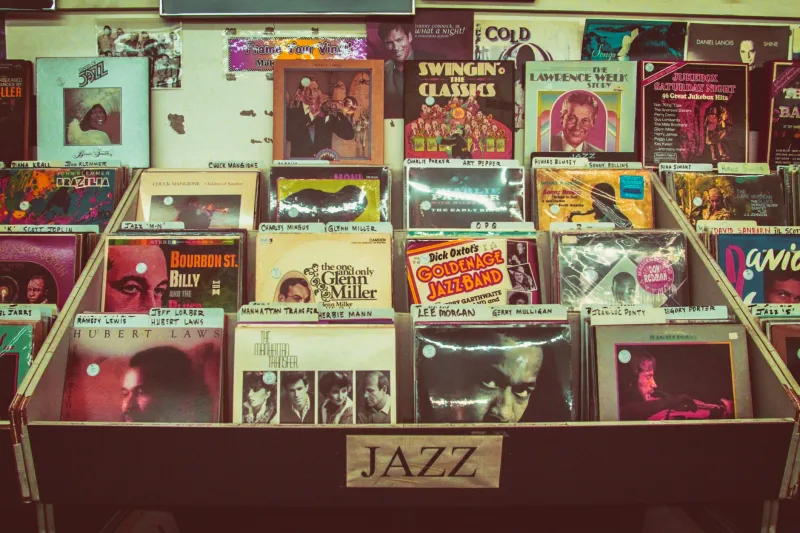
Walk into the National Museum of American History in Washington, D.C., and you'll find a perfectly curated exhibit on jazz. Informational panels. Restored instruments. Carefully preserved recordings piped through quality speakers. It's impressive, genuinely. And it feels about as alive as a taxidermied bird.
That's not a knock on the curators. They're doing exactly what museums are supposed to do. The problem is that jazz and blues were never supposed to be museum music.
How We Got Here
The institutionalization of jazz and blues happened gradually, and with the best of intentions. After decades of being dismissed as lowbrow entertainment—or worse, as dangerous Black music unfit for polite society—these genres finally started receiving the cultural legitimacy they'd always deserved. Academic programs, Smithsonian recordings, NEA grants, Lincoln Center concerts. The establishment finally said: this is serious art.
And it is serious art. Nobody's arguing otherwise.
But somewhere in the process of getting jazz and blues onto university syllabi and into climate-controlled storage facilities, the music got separated from the conditions that made it what it was. The urgency. The risk. The fact that it was invented by people with very little to lose and everything to say.
When you strip away that context and present the music as cultural heritage—something to be appreciated and preserved rather than felt and argued about—you're left with something that technically sounds the same but functionally isn't.
The Festival Problem
Look at what's happened to the major jazz and blues festivals. The Newport Jazz Festival, which in 1960 literally sparked a riot when thousands of fans got turned away and tore up the place, is now a ticketed prestige event where corporate sponsorship banners frame every stage. The New Orleans Jazz & Heritage Festival, once an organic celebration rooted in the city's actual musical community, now draws hundreds of thousands of tourists who've never heard of Professor Longhair and aren't particularly interested in finding out.
None of this is inherently bad. Big audiences are good. Money flowing into the music economy is good. But the transformation of these festivals from community events into premium experiences has a cost that doesn't show up on the balance sheet.
When a festival becomes primarily a destination for affluent music tourists rather than a gathering of the community that actually lives the tradition, the music gets performed for an audience rather than with one. That's a fundamental shift. Jazz and blues were participatory in ways that get lost when the crowd is mostly there for the Instagram moment and the craft cocktails.
What the Academy Does to a Living Thing
University jazz programs have produced genuinely extraordinary musicians. No argument there. But the academic framework also does something to the music that's worth examining honestly.
When improvisation becomes a subject you study for a grade, something changes. When the blues form is analyzed through the lens of music theory rather than lived experience, the emotional core can get academicized right out of it. There's a reason the greatest blues musicians weren't products of conservatories—they were products of specific places, specific histories, specific kinds of pain and joy that don't transfer well to a lecture hall.
This isn't an anti-education argument. It's a question about what education is actually transmitting. If a student can write a perfect analysis of Robert Johnson's guitar technique but has never felt the music in their chest, has the tradition actually been passed on? Or has it been documented?
Documentation and transmission are not the same thing.
The Authenticity Trap
Here's where this gets complicated, because the counter-argument is real and worth taking seriously. The alternative to institutionalization isn't necessarily authenticity—it might just be neglect.
Without academic programs, who teaches the next generation of jazz musicians? Without museums and archives, who preserves the recordings and instruments and photographs? Without festivals and grants, who funds the artists who are keeping the tradition alive? The romantic notion of jazz and blues surviving purely on street-level energy runs straight into the economic reality that musicians need to eat.
The Smithsonian Folkways catalog has preserved recordings that would otherwise be completely lost. The Jazz at Lincoln Center program has brought serious jazz to audiences who might never have encountered it. The Kennedy Center's jazz programming has given artists a platform and a paycheck. These things matter.
The question isn't whether institutions should exist. It's whether the institutions are serving the music or the music is serving the institutions.
The Venues That Still Have It
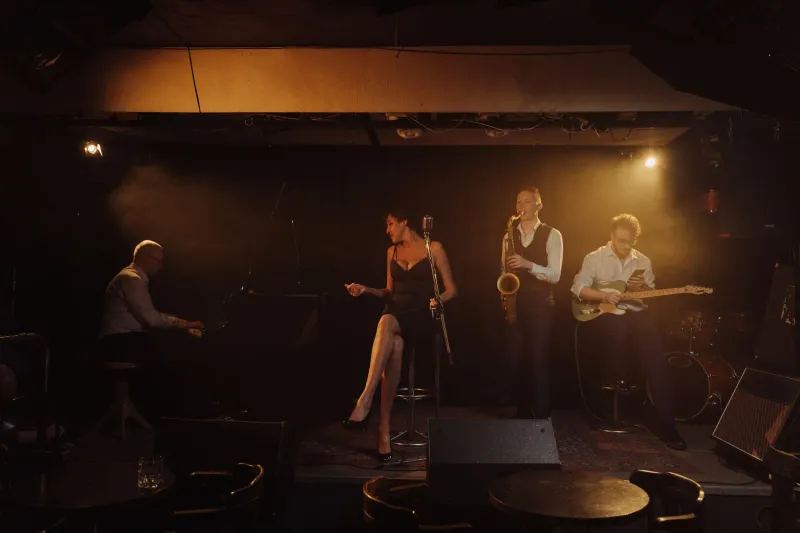
Spend a Tuesday night at a real jazz room—not a festival stage, not a concert hall, but an actual club where the musicians are three feet from the audience and the set list is being decided in real time—and you'll remember immediately what all the fuss is about.
These spaces still exist. They're harder to find and most of them are perpetually on the edge of closing, but they're there. The Spotted Cat in New Orleans. The Green Mill in Chicago. Smalls in New York. Places where the music is still dangerous in the best possible sense—where you genuinely don't know what's going to happen next because the musicians don't know either.
That's the thing that can't be put in an exhibit. The not-knowing. The collective leap into improvised space. The moment when a band finds something they've never found before and the whole room feels it simultaneously.
No amount of institutional support can manufacture that. It has to happen live, in real time, between human beings who are actually listening to each other.
Preservation Without Paralysis
The goal shouldn't be to tear down the institutions—it should be to make sure they stay accountable to the living tradition rather than the archived one. That means funding working musicians, not just musicologists. It means festival lineups that prioritize the communities these genres come from, not just the names that sell tickets to tourists. It means university programs that send students into actual clubs to listen before they ever open a textbook.
Jazz and blues survived segregation, exploitation, commercial neglect, and a dozen premature obituaries. They can probably survive a few too many museum plaques. But let's not make it easier than it has to be.
Keep the archives. Keep the programs. But for the love of everything holy, keep the clubs open too.
That's where the music actually lives.