Drop the Algorithm, Drop the Needle: How Vinyl Is Giving Jazz and Blues Listeners Their Ears Back
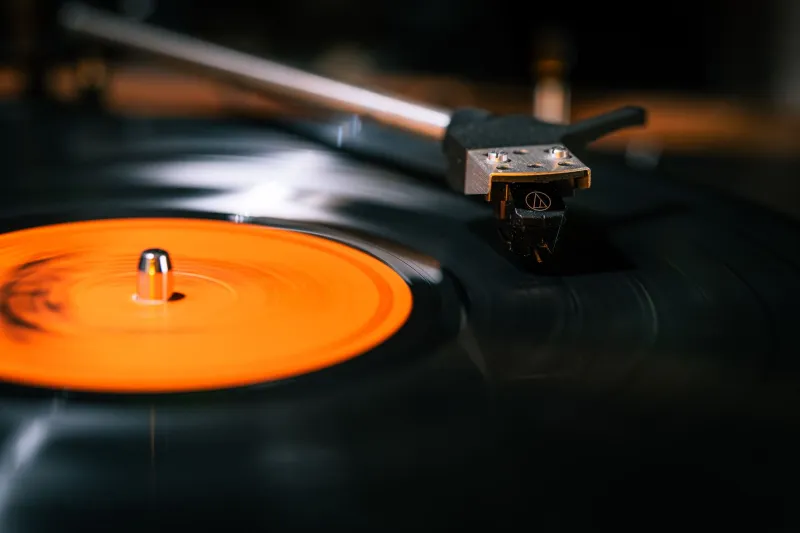
There's a particular kind of silence that happens right before a record plays. The needle finds the groove, there's that familiar crackle — warm and imperfect and completely alive — and then the music comes up from somewhere underneath the floor. It doesn't feel like a file loading. It feels like something waking up.
That feeling is exactly why vinyl sales have climbed for eighteen consecutive years in the United States, and why jazz and blues listeners are leading some of the most passionate corners of that revival. But this isn't just about nostalgia or audiophile snobbery. Something more fundamental is happening. People are rejecting the curation-by-committee model that streaming platforms have quietly installed inside our ears, and they're replacing it with something older, slower, and — a lot of them will tell you — truer.
The Algorithm Isn't Listening to You
Here's the thing about a streaming playlist: it's designed to keep you engaged, not to challenge you. The major platforms have spent billions of dollars engineering recommendation engines that serve you more of what you already know you like. For pop music, maybe that's fine. For jazz and blues, it's close to a catastrophe.
Jazz and blues are genres built on tension, surprise, and development. A Miles Davis record doesn't give you what you want in the first thirty seconds — it earns your attention over forty minutes. An algorithm that judges a track by its skip rate is structurally incapable of understanding that. It'll never recommend Bitches Brew to someone who just discovered Kind of Blue, because the data says people who skip complex music are "less engaged," and engagement is the only metric that matters.
Vinyl doesn't care about engagement metrics. It just plays the record.
"I'd been streaming jazz for two years and I genuinely thought I knew the genre," says Marcus Webb, a record collector based in Chicago who runs a monthly listening session out of his Logan Square apartment. "Then I started buying records and I realized I'd been in this tiny little box the whole time. The algorithm had basically been feeding me the same thirty artists on shuffle. I'd never even heard of half the stuff I found just by flipping through bins at my local shop."
The Bin Flip as Discovery Engine
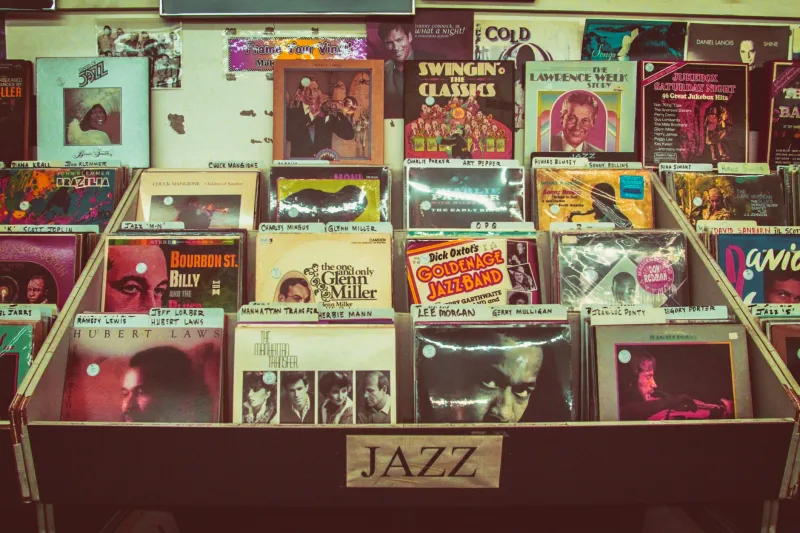
There's a phrase collectors use: "going crate digging." It refers to the physical act of flipping through records at a shop or a swap meet, pulling covers that catch your eye, reading liner notes, making snap decisions based on nothing more than a name, a label, a year, or a photograph. It sounds inefficient. It is inefficient. That's the whole point.
Efficiency is the enemy of discovery in music. When you let a platform decide what you hear next, you're outsourcing your taste to a machine that only knows your past. When you pull a record you've never heard of off a shelf in a Nashville record shop because the cover art looks like something from another planet, you're doing something the algorithm can't simulate: you're taking a genuine risk.
For jazz and blues specifically, that risk almost always pays off. These genres have deep catalogs — decades of recordings on small regional labels, limited pressings, live documents, and side projects that never made it onto streaming platforms at all. The vinyl format doesn't just offer a different way to hear the music that's already available. It opens doors to music that exists only on wax.
Blue Note, Prestige, Chess, Stax, Vanguard — these labels built catalogs that defined American music, and while the flagship titles are streamable, the deeper cuts often aren't. The only way to hear them is to find the physical object.
What the Listeners Are Actually Saying
Ask vinyl converts in the jazz and blues world why they made the switch, and you'll hear two distinct answers. The first is sonic. The second is spiritual.
On the sonic side, the analog argument is well-documented. Vinyl preserves audio information that digital compression discards — the subtle warmth of a room, the breath between notes, the way a bass line sits in the low end of a recording. Whether that difference is scientifically significant or psychologically constructed is a debate that'll never fully resolve. But listeners consistently report that jazz and blues, in particular, sound more present on vinyl. The intimacy of a small-group recording — a piano trio, a guitar-and-harmonica duo — comes through in a way that earbuds and MP3s just don't communicate.
"You put on a Billie Holiday record and it sounds like she's in the room," says Diane Troutman, who hosts a jazz radio program out of New Orleans and has been collecting since the 1980s. "Streaming sounds like a photograph of her. The record sounds like she showed up."
The spiritual argument is harder to quantify but maybe more important. Vinyl demands your full attention. You can't put it on in the background and forget about it — you have to flip it, you have to be present for it, you have to commit to sitting with an entire album in the sequence the artist intended. In an era of shuffle culture and thirty-second attention spans, that's a radical act.
Emerging Artists Are Paying Attention
Here's the part of the story that doesn't get told enough: the vinyl revival isn't just benefiting classic recordings. It's actively changing the economics and creative decisions of working jazz and blues musicians right now.
Independent artists who press vinyl are finding that their records create a different kind of fan relationship than streaming does. Someone who spends thirty dollars on your album has made a commitment. They're going to listen to the whole thing. They're going to read the liner notes. They're going to tell someone about it. The conversion from casual listener to genuine advocate happens faster and more completely through vinyl than through any streaming playlist.
Bandcamp's vinyl sales data has shown consistent growth in jazz and blues categories year over year, and a growing number of smaller labels — Newvelle, Craft Recordings' reissue arm, and regional imprints across the South and Midwest — are betting their business models on listeners who want to own something physical.
"Pressing vinyl is expensive and the margins are thin," admits one Chicago-based label owner who asked not to be named. "But the people who buy records are listeners. Not just streamers. There's a difference, and it's the difference between someone who's with you for one song and someone who's with you for a career."
The Democracy of the Turntable
There's something quietly political about all of this. Streaming platforms are owned by massive corporations with opaque recommendation systems and financial arrangements that pay most artists fractions of a penny per play. The vinyl ecosystem — the pressing plants, the indie shops, the swap meets, the collectors' communities — is decentralized, local, and human-scaled.
When you buy a jazz record at a shop in Memphis or a blues 45 at a flea market in the Mississippi Delta, that money moves differently than a stream does. It goes to a local business, to a collector who found the record at an estate sale, to a pressing plant worker in Ohio. The music stays connected to the geography and the community that created it.
That's not an accident. Jazz and blues were always community music — built in neighborhoods, passed between musicians, sustained by local audiences who showed up and paid attention. The vinyl format, with its insistence on physical presence and intentional listening, is one of the few spaces left where that original relationship between music and community still has room to breathe.
Drop the algorithm. Drop the needle. See what you've been missing.