Wax On, Stream Off: Why Independent Record Stores Are Jazz and Blues Culture's Last Real Home
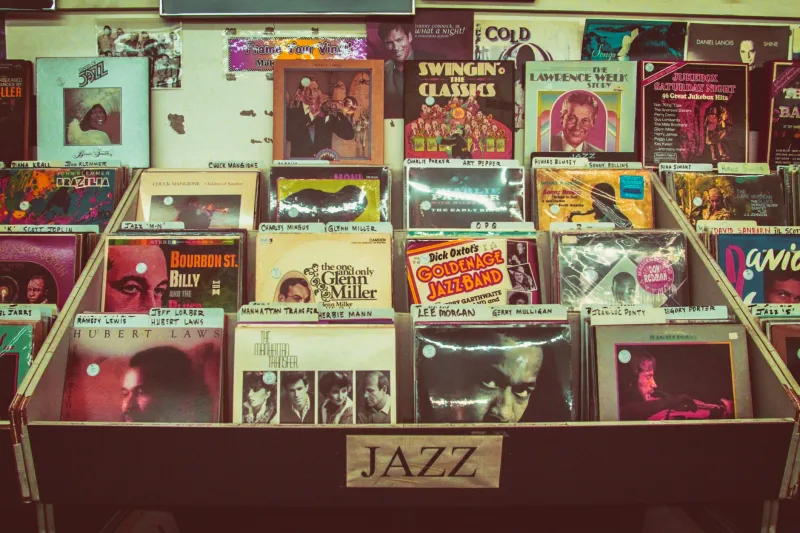
Walk into Euclid Records in St. Louis on a Saturday afternoon and you'll hear something you won't find on any playlist Spotify has ever curated for you. Maybe it's a Clifford Brown side from 1954 crackling through a pair of vintage speakers. Maybe it's a field recording of a Delta blues guitarist nobody under fifty has ever heard of. Whatever it is, it's real, it's physical, and it was chosen by a human being who actually gives a damn.
That's the thing about independent record stores. They're not running an algorithm. They're running a philosophy.
While the music industry keeps chasing streams and monthly listeners, a quietly stubborn network of indie shops from Portland, Oregon to Portland, Maine is doing the heavy lifting of keeping jazz and blues alive — not as nostalgia, but as living, breathing American culture.
More Than a Store, Less Than a Museum
The easy narrative is that record stores are charming relics, cute little time capsules for people who like the warm crackle of vinyl. That narrative misses the point entirely.
Talk to the people actually running these places and you'll hear a different story. "We're a community center that sells records," says Marcus Webb, who's owned Groove Merchant Records in San Francisco for over two decades. "People come in here to argue about whether McCoy Tyner or Herbie Hancock had the better left hand. They stay for two hours. Nobody does that on Spotify."
That community function is something no streaming platform has figured out how to replicate. You can't stumble across a stranger in a digital queue who pulls a record out of your hands and says, "No, no — you need to hear this one first." But that happens in independent stores every single weekend across America, and for jazz and blues music specifically, that kind of guided discovery is everything.
These genres have always depended on mentorship and word of mouth. From the way bebop spread through New York's club circuit in the 1940s to how Chicago blues found its audience through radio DJs who actually knew the players personally, jazz and blues culture has never been about passive consumption. Independent record stores are the modern version of that same ecosystem.
The Economics of Stubbornness
None of this comes easy. The financial math of running an independent record store in 2024 is, to put it charitably, challenging.
Record Store Day — the annual April celebration that draws collectors out in droves — helps. So does the broader vinyl revival, which has seen LP sales outpace CDs for the second straight year according to the Recording Industry Association of America. But the margins on physical music retail are thin, and jazz and blues records, which don't move with the same velocity as pop or classic rock titles, require a particular kind of patience.
"I'm not getting rich," admits Delia Fontaine, who runs Second Line Sounds in New Orleans. "But I'm doing something that matters. When a twenty-two-year-old comes in here and walks out with a Bessie Smith record they'd never heard of, that's not a transaction. That's a conversion."
Fontaine's shop, like many of the best independent stores, has diversified to stay afloat. In-store performances, listening events, record release parties for local artists — these things bring people through the door and build the kind of loyalty that no loyalty program can manufacture. Her store hosts a monthly blues listening session that draws a genuinely mixed crowd, age-wise and background-wise, which is exactly the kind of audience American roots music needs if it's going to survive the next fifty years.
The Curation Nobody Talks About
Here's what streaming services will never tell you: curation is hard, and most of them are bad at it — at least when it comes to jazz and blues.
The catalogs are there. You can technically find a lot of it. But discoverability is a different problem. If you don't already know to search for Art Tatum or Junior Wells, you're probably not going to stumble onto them through a "similar artists" sidebar. The algorithm rewards what's already popular, which means the deep cuts and overlooked masterworks keep getting buried.
Independent record store owners are, in a very real sense, professional curators. They buy collections, sort through thousands of records, and make deliberate decisions about what deserves shelf space. That process is an act of cultural preservation whether they'd call it that or not.
"I turned down three copies of the same Eagles record last week and bought a box of Blue Note pressings from the sixties," says Tommy Okafor, who operates Midnight Special Records in Chicago's South Side. "That's a choice. I'm deciding what this neighborhood has access to."
Okafor's store sits in a part of the city with deep blues roots — this is the neighborhood that gave electric Chicago blues to the world — and he takes that responsibility seriously. He keeps a section dedicated entirely to local artists, living and dead, and makes a point of talking to every customer who lingers near it.
New Ears, Old Grooves
The most surprising thing happening in independent record stores right now isn't the nostalgia crowd. It's the kids.
Gen Z collectors have shown up for vinyl in a way nobody predicted, and a meaningful portion of them are landing on jazz and blues not through their parents' collections but through TikTok rabbit holes, film soundtracks, and — crucially — the recommendations they get when they walk into a store and ask someone what they should listen to.
"I had a nineteen-year-old in here last month who came in because of a John Coltrane sample she heard in a video game," says Webb. "She left with 'A Love Supreme' and a Muddy Waters record. I didn't push her. I just asked her what she liked and pointed her in the right direction."
That's the transaction that no streaming service has cracked. Not because the technology isn't there, but because the human element — the genuine enthusiasm, the shared history, the sense that someone is actually invested in your musical education — can't be coded.
Why It All Matters
Jazz and blues aren't just genres. They're the foundational grammar of American music. They gave us rock and roll, soul, hip-hop, and half of everything else worth listening to that came out of this country in the last hundred years. Losing the spaces where that culture is actively tended and passed on isn't just a retail problem — it's a cultural one.
Independent record stores aren't perfect. They can be intimidating. They can be disorganized. They can sometimes feel like clubs with invisible membership requirements. But the good ones — and there are more good ones than you might think — are doing something genuinely essential.
They're keeping the music physical, keeping it communal, and keeping it alive for the next person who walks through the door and doesn't yet know that a single record is about to change their life.
That's worth a lot more than a monthly subscription fee.


