Clear Channel, Blurred Credit: How a Nashville Station Sold the Blues to the Whole Country
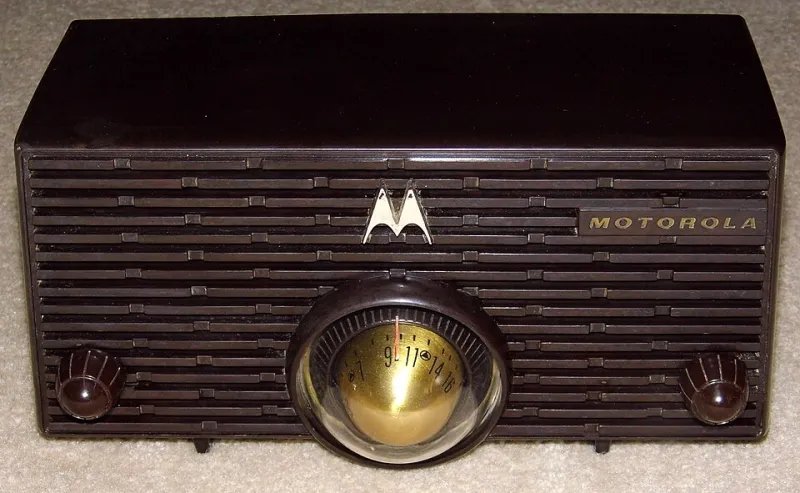
Photo: Joe Haupt from USA, CC BY-SA 2.0, via Wikimedia Commons
There's a particular kind of American night that only exists on AM radio. The sun goes down, the ionosphere bends, and a station that sounds local after lunch suddenly belongs to the entire country.
For a couple of decades after World War II, that station was WLAC out of Nashville — 50,000 watts on a clear channel, no nighttime competitor on the frequency, which meant that somewhere around 8 or 9 p.m. Central, a DJ in a small studio could talk to a kid in a Mississippi Delta shack, a soldier in a barracks in the Midwest, or a carload of teenagers outside Detroit.
When the Signal Went Everywhere
WLAC was owned by Life & Casualty, an insurance company, and its daytime programming was unremarkable. The interesting decision came in the mid-1940s, when the station started filling its overnight hours with rhythm and blues records aimed squarely at Black listeners — and, as the mail-order responses proved, at plenty of white ones too.
By most accounts the nighttime signal reached into nearly thirty states, plus Canada and the Caribbean. That's not a regional audience. That's a national one, assembled by a transmitter and a stack of 78s.
The Voices Were White, the Records Were Black
The on-air talent became legends in their own right: Gene Nobles, John R. Richbourg, Bill 'Hoss' Allen, Herman Grizzard. They were white men in a Southern city playing Black music to a mixed and largely invisible audience, using a cadence and a set of verbal tics that people can still imitate sixty years later. 'John R.' wasn't a stage name so much as a brand.
This is the part where the story gets interesting, because it's not a simple story of villainy. Those DJs turned a generation of listeners onto music that mainstream radio wouldn't touch. They also became the gatekeepers of a national market, which is a very different job description than 'tastemaker,' and it comes with a different set of temptations.
Two Sponsors, Two Very Different Businesses
The commercial engine was mail order. Advertisers like Randy's Record Shop in Gallatin, Tennessee, and Ernie's Record Mart in Nashville bought blocks of airtime and sold records by mail to listeners who had no other way to buy them. Order a platter, send a dollar, wait for the postman. That was the distribution system for a huge chunk of Black American music in the late 1940s and 1950s.
Then the two sponsors took their airtime money and did opposite things with it.
Randy Wood founded Dot Records, which became a machine for white covers of Black hits — sanitized versions of songs that WLAC had broken in the first place, sold back to the pop chart. That's how a record store advertiser ends up competing directly with the artists whose records made his ads profitable.
Ernie Young went the other way. His Excello Records put out swamp blues, gospel, and R&B by the actual artists, and it built real careers. Slim Harpo's 'Baby Scratch My Back' topped the R&B chart in 1966. Lightnin' Slim and Lonesome Sundown recorded deep catalogs. Excello wasn't a charity — it was a business — but it was a business that paid the people who made the records.
Who Got Paid
Airplay on WLAC didn't put a dime in an artist's pocket directly. The station got the exposure, the advertisers got the orders, the label got the sales. The musician got whatever the contract said, which in that era was frequently a flat session fee and a handshake on the back end.
Publishing was the quieter leak. Songs got registered under names that weren't always the songwriter's, and the writers who did get credit often got it at a rate that assumed they'd never be in a position to negotiate. When those songs got covered, the money followed the paperwork.
And then there's the exposure question itself. WLAC could make a record move, but it could also decide which records moved. A DJ with a nightly national audience and a personal taste for a certain tempo is a powerful figure, and the payola hearings of the late 1950s were, among other things, an argument about how much of that power was for sale.
What Got Left Off the Ledger
The station's white voices are thoroughly documented — photographs, airchecks, affectionate retrospectives. The Black musicians who came through the building, the engineers, the people who hauled records and answered mail, are considerably harder to find.
That asymmetry is the real archive problem. WLAC's history gets told as a story about four white men with great pipes who loved R&B, and there's truth in that. But the music was the product, and the people who made the product were, for the most part, not in the room when the terms got set.
By the early 1970s the overnight R&B bloc was gone, and the station eventually moved on to other formats. But for a stretch of American history, a Nashville transmitter was the closest thing this country had to a national Black music network — and the artists whose records carried that signal mostly watched it travel without them.